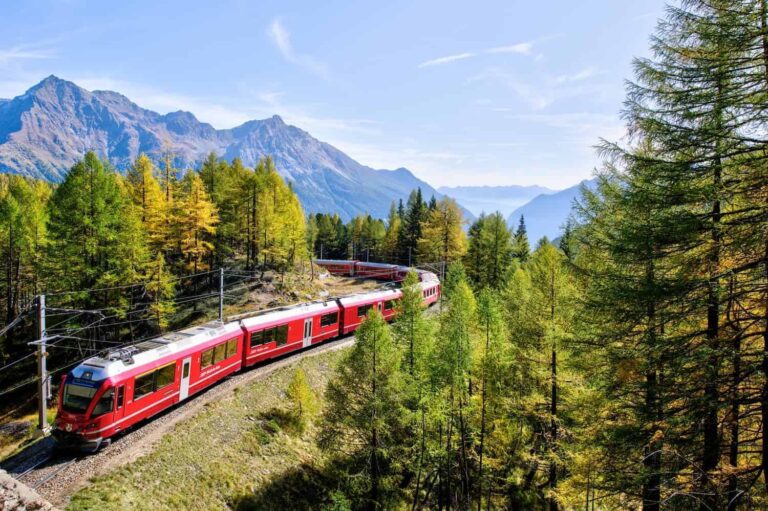
Leaving Austria and Taking The Sleeper Train to Italy (3/3)
Experience travelling overnight on a sleeper train to Italy from Salzburg, with tips on booking, travel options, and exploring Pisa and Rome.
Welcome to Leaving Austria and Catching the Sleeper Train to Italy – the final part in a series of three blog posts covering our epic 2023 Interrail trip from London to Rome.
If you’ve not already, I’d suggest reading the series in chronological order to fully understand the planning and preparation that went into the trip and to follow the exact route we took.
Part one: London to Paris: Starting an Epic Interrail Trip to Rome
Part two: Exploring the Alps by Train: Zurich, Innsbruck, and Salzburg
And here we are, travelling through the night from Salzburg, our base of the last few days, to Italy.
If you’re looking for a comfortable and convenient way to travel from Central Europe to Italy’s Cinque Terre, then the Munich-Salzburg-Cinque Terre (La Spezia) Nightjet sleeper train is a great option.
Tip: Check out our full review of the Salzburg to Cinque Terre Sleeper Train
The main attraction for me is that we got to reposition ourselves from Austria to Italy overnight, covering more than 670km while we slept. Much better than using a day just to travel.

Night Trains in Europe
After years of decline, night trains in Europe are experiencing a huge resurgence in popularity, capturing the imagination of travellers seeking both convenience and adventure.
With an increasing focus on sustainable and slow travel and the prospect of scenic routes, more people are opting for overnight train journeys to explore Europe.
From the comfort of cozy sleeper cabins, passengers can enjoy a journey that not only transports them to their destination but also allows them to savour the romance of train travel.
Huge amounts of money are being invested by rail operators, including Nightjet, to modernise and expand their sleeper train services, offering things such as Wi-Fi, dining cars, and private compartments.
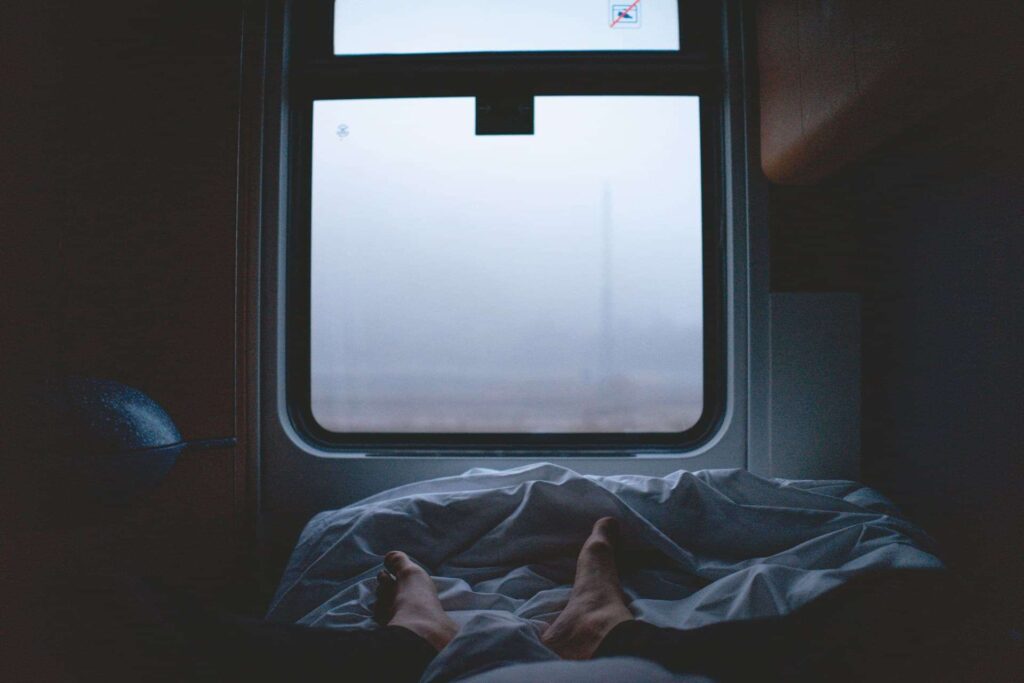
Night Train Sleeping Options
Travelling through Europe by night train offers various comfort options to suit every traveller.
The seat car is the most affordable option on an ÖBB Nightjet. Compartments hold up to six people, with washrooms in every car. You can book a private seating compartment for up to three people at a flat rate.
For groups or budget travellers, the couchette car is ideal. Compartments hold four to six people, with each bunk providing a blanket, sheet, and pillow. Private compartments for up to six people are available at a flat rate.
Solo travellers seeking privacy can opt for the mini cabin (only available on some services using newer carriages), featuring a cocoon-like design. The ticket includes a couchette berth, mineral water, and breakfast.
And we can confirm that the sleeping car offers the most comfort, with compartments for one to three people. Enjoy made-up beds, an à la carte breakfast, and private washing facilities. Some compartments – like ours – even include a private shower and toilet.
I had a shower in the morning, and was surprised at how good it was.

Our Sleeper Train to Italy
There’s more than 30 sleeper trains operating across Europe, with Nightjet and Euronight the main two operators.
Catching the Nightjet from Salzburg allowed us an extra full day there. When we checked out of our hotel in the morning, we stored our bags in a secure and cheap luggage locker at Salzburg HBF (the main train station) before heading out for the day.
That evening, we returned to the station to catch the 22:02 Nightjet sleeper service to La Spezia, Italy. Our train had actually started earlier in the evening from Munich, Germany.
After boarding in Salzburg it headed south overnight, before (very early) stops at Padova, Vicenza, Brescia, Milan and Genoa.

Due in to La Spezia at 11.10am, we actually got off a stop early (10:53am) as we were staying in the Cinque Terre town of Monterosso al Mare.
The train is operated by ÖBB, the Austrian national rail company, and offers a range of sleeping compartments to suit different budgets and travel needs.
We opted for a private sleeper compartment, which was clean and comfortable with single bunk beds and a toilet/shower/washbasin. The bedding was provided and the beds already made up, and we were able to get a good night’s sleep before arriving in La Spezia the next morning.
Tip: We were able to use our Interrail pass to get a significant discount on the full fare.
It was the first time I’d booked a sleeper train but I’m so glad we did. Not only was it convenient but it was also a very practical way to reach Italy.
Practical Travel Tips
Here’s a list of my top bits of advice if you’re thinking of booking a sleeper train
- Plan ahead: Booking for most of the sleeper trains opens around six months before travel. And sometimes you need to be ready on Day One as they often sell out – particularly on popular routes and school holidays.
- Take snacks: Most sleeper trains don’t have a dining car like in the movies – we wish they did. Whilst you’ll get a bottle of water and be able to buy some light snacks, we always stock up with a sandwich, drink and a beer from the local supermarket.
- Essentials for your trip: Sleeper trains are great fun, but they can also be noisy. Whether that’s just the noise of a normal train journey, or an adjacent cabin that’s boarding/getting off when you’re still sleeping.
- Passport: We’ve not been asked for our passport, but other travellers report this sometimes happening. The best advice is to always have a printed scan of your passport, so you can leave this with the train attendant if they need it, to save you being woken up.
- Compare the cost: It’s worth comparing the cost of a hotel + train journey vs. the cost of a sleeper. But even if the cost is similar, you have to factor in the time you’re saving by moving while you sleep.
- Arrive 30 minutes early: It’s worth getting to the platform a little early, especially if the train starts from the station you’re getting on. Sleeper trains take a little while to board, so you could be on earlier than you think and take the chance to get yourself settled in.
Italy’s Cinque Terre

The Cinque Terre is the collective name give to five towns perched along the coastline between Genoa and La Spezia. It was somewhere we didn’t know a huge amount about before planning this trip.
But the more we looked into it, the more convinced we were that this was somewhere that we had to explore. I’d enjoyed holidays in Sorrento previously and this felt similar. After visiting, the best description I could offer as to what the Cinque Terre is really like, is “a rustic Amalfi Coast”.
One of the major draws of the area is that the Nightjet Sleeper brought us here from Salzburg. A great way to spend a night sleeping as you travel, saving on money and time.

Even though the sleeper train ends in La Spezia, there is a handy stop in Monterosso al Mare – one of the five towns. The station is right in the centre of the town and just yards from the beach.
We really liked Monterosso al Mare, with its sandy beaches and colourful waterfront. The sea was quite rough when we visitied, but still great to paddle in.
The abundance of pizza and pasta restaurants, as well as tempting gelato stalls, ensured that we never went hungry!
Poseidon Apartment Monterosso al Mare

We chose our accommodation here very carefully, knowing it was the midpoint of our trip, so we wanted an apartment so we could wash all of our clothes for the second half of our journey.
We got lucky with a fantastic find and stayed in the Poseidon Apartment (through Booking.com), just a stones throw from the beach, restaurants and a supermarket. It was perfect and cost €500 for three nights.
Save money: I spotted an 8% cashback offer on Quidco when I booked this hotel. Saving me roughly £40 for simply clicking on a link. Join Quido here
Our Top 3 Things to in Monterosso al Mare

We were fortunate to be staying in Monterosso. But if you’re elsewhere, then I’d highly recommend spending at least a day here.
One of the main attractions of Monterosso al Mare is its beautiful beach. Spiaggia Fegina is the only true sandy beach in the Cinque Terre region. It’s the perfect spot to soak up the sun and take a dip in the clear waters of the Ligurian Sea. We had the added benefit of it being just 30 seconds walk from our apartment.
Aside from the beach, there are plenty of other things to do in Monterosso al Mare. You can take a stroll through the historic centre and admire the colourful houses and narrow streets.
Or visit the Church of San Giovanni Battista, which dates back to the 13th century. For a taste of local cuisine, head to one of the many restaurants in town for the region’s famous seafood dishes.
Explore the town

When it comes to relaxing on the beach, Monterosso al Mare is the perfect spot. This beautiful town boasts the only true sandy beach in the entire Cinque Terre region, Spiaggia Fegina.
The beach has sun loungers and umbrellas that you can rent for the day. Or you can rent a kayak and paddle along the coast.
The old town is characterised by narrow medieval streets known as “carruggi”, lined with multi-coloured terraced houses, shops and restaurants.
One of the highlights of the old town is the ruins of the castle that dominates the area. The castle is also home to the Aurora Tower, offering a glimpse into the rich history of Monterosso al Mare.
Take the Train to Other Cinque Terre Towns

One of the best things to do in Monterosso al Mare is to explore the other towns in the Cinque Terre. Lucky for you, the train station is just a short walk from the beach and the town centre.
The train is the easiest and most efficient way to travel between the five towns. You can purchase tickets at the station or online in advance. Trains run frequently, so you won’t have to wait long for your ride.
Each town has its unique charm, so it’s worth visiting all five if you have the time.
Monterosso al Mare
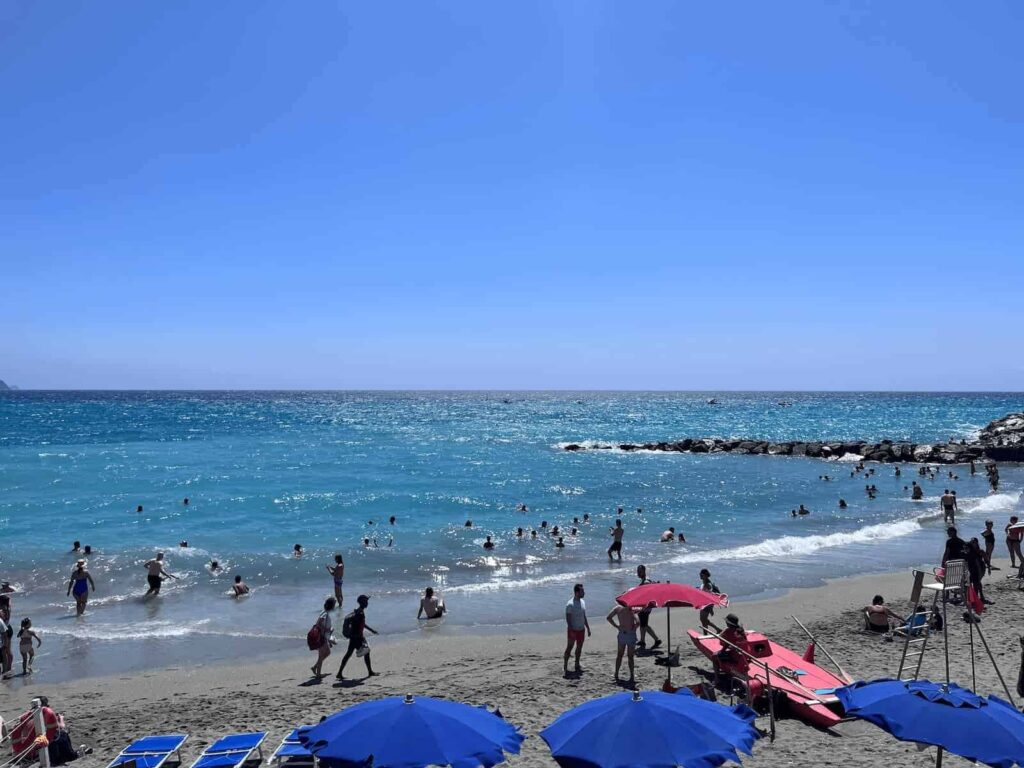
The largest of the Cinque Terre villages, boasts the region’s most extensive beach, divided into an old town and a new town. The old town features medieval architecture and the Church of San Giovanni Battista. Monterosso is known for its vibrant atmosphere, lemon trees, and delicious anchovies, making it a popular spot for sunbathing, swimming, and culinary delights.
Vernazza
Considered the most picturesque of the Cinque Terre towns, with its natural harbor, pastel-coloured houses, and dramatic coastal scenery. Dominated by the medieval Doria Castle, Vernazza offers breathtaking views and a charming waterfront. The Church of Santa Margherita d’Antiochia is a notable landmark, contributing to the village’s timeless beauty and vibrant atmosphere.
Corniglia
Perched high on a cliff, Corniglia offers stunning panoramic views and a tranquil, secluded atmosphere. Accessible by the Lardarina staircase or a shuttle bus, this town is less touristy and more traditional, with narrow streets and terraced vineyards. Corniglia’s main square, Largo Taragio, provides a peaceful retreat for enjoying local delicacies and serene surroundings.
Manarola

Manarola is famous for its colourful houses cascading down a steep hillside to a small harbour. Known for its wine production, particularly the sweet Sciacchetrà wine, Manarola offers picturesque views and charming streets lined with shops, cafes, and restaurants. The scenic Via dell’Amore connects Manarola to Riomaggiore, offering a romantic walk with stunning sea views.
Riomaggiore
The easternmost village of Cinque Terre, features steep, narrow streets and brightly colored houses. Its bustling main street, Via Colombo, is lined with shops, restaurants, and bars. The small harbor is a popular spot for swimming and enjoying the sunset. The Church of San Giovanni Battista adds to the village’s historic charm and vibrant local culture.
Visit the Leaning Tower of Pisa by Train
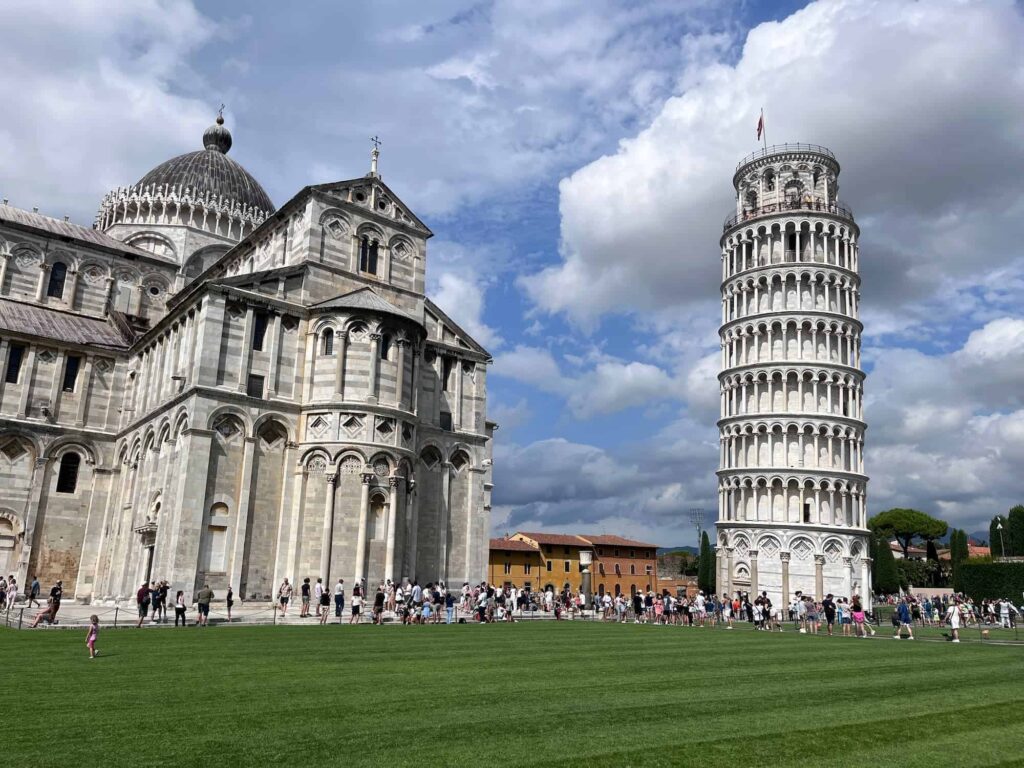
One of the most famous attractions in this part of Italy is the iconic Leaning Tower of Pisa. You can easily get there by train from Monterosso, and it only takes about 1.5 hours each way.
To start your journey, head to the Monterosso al Mare train station and purchase a ticket to Pisa Centrale. The train ride is a scenic journey through the Tuscan countryside, and you’ll arrive at Pisa Centrale in just under an hour.
Once you arrive in Pisa, it’s a 22-minute walk to the Leaning Tower. Alternatively, you can take a taxi for around €10 one way. Keep in mind that the tower is a popular tourist attraction, so it’s best to arrive early to avoid long lines.
When you arrive at the Leaning Tower, you’ll be able to take in its unique architecture and snap some photos. You can also climb to the top of the tower for a stunning view of the city.
La Spezia to Rome by Train

The final leg of our Interrail Route between London and Rome took us from La Spezia to Rome. Our journey time was 3 hours and 47 minutes, departing from La Spezia at 13:16 and arriving in Rome at 17:03.
We opted for Trenitalia Frecce, which offers high-speed trains that make the journey in just over 3 hours. The train is comfortable and spacious, with plenty of legroom and air conditioning.
The train journey from La Spezia to Rome can be quite busy, especially during peak travel times. So I’d advise booking your tickets in advance to make that you get a seat on the train or can sit together.
Exploring Rome
Rome was the final destination in our journey from London to Rome by train. I’d been here years ago, but it was great to go back again.
I’ve often thought that the city has the most world-famous tourist attractions in one place.
We arrived on the train into Rome Termini late afternoon. The station is in the heart of the city, so we were quickly walking to our hotel.
Where to stay in Rome?
I can confirm that this was the first time I’ve ever stayed in a Monastery. Well, a restored Monastery!
The Casa I Cappuccini was a brilliant find, just 50 metres from Barberini Metro which can take you to the main Termini station in two stops, and less than half a mile from the Spanish Steps.
Set on popular Via Veneto street, all of the rooms are en suite.
It was perhaps the best value of any hotel we stayed in throughout our trip. 320 euros for 3 nights! I would have happily paid a lot more than this for some brilliant accommodation.
Save money: I spotted an 8% cashback offer on Quidco when I booked this hotel. Saving me roughly £25 for simply clicking on a link. Join Quido here
Our Top 3 Things to do in Rome
We had four days here so we didn’t have the action-packed schedule that we’d had elsewhere.
I’d designed the trip in that way as we knew energy levels might be sapping. But there is also just so much to see and do in Rome.
As we did in Paris, we grabbed some tickets for the Big Bus Tour – these are such a great way to get a feel for a new city and to make a list of where you want to go back to.
The Essential Ticket is the best value option, offering 48 hours of unlimited hop-on, hop-off access to the Big Bus and ORP buses, as well as free digital walking tours and a fully flexible bus ticket. If you have more time to explore, the Explore Ticket offers 72 hours of access to the same benefits.
During your tour, you’ll pass by all of the must-see landmarks and attractions in Rome, including the Colosseum, Circus Maximus, Piazza Venezia, and Vatican City. With stops located nearby, you can hop off the bus to explore these sights at your own pace before hopping back on to continue your journey.
Colosseum

No trip to Rome is complete without a visit to the Colosseum, one of the most iconic landmarks. Built in 80 AD, this ancient amphitheatre was used for gladiatorial contests and public spectacles. Today, it is one of the most popular tourist attractions in Rome, and for good reason.
We booked a guided tour with priority access. This allowed us to skip the long queues and get straight into the Colosseum, Roman Forum, and Palatine Hill. You’ll be able to walk in the footsteps of gladiators and emperors as you travel back to the era of ancient Rome.
Book Online: Rome: Priority Access Colosseum, Roman Forum & Palatine Tour
During your tour, you’ll learn about the history and its significance in Roman culture. The view from the top of the Colosseum is breathtaking, and you’ll be able to see the entire city of Rome.
If you’re interested in Roman history, or just want to experience one of the world’s most famous landmarks, the Colosseum is a must-visit destination.
Spanish Steps

This iconic landmark is located in Piazza di Spagna and is a popular tourist attraction in the city.
The Spanish Steps are a set of 135 steps that lead up to the Trinita dei Monti church. The steps were built in the 18th century and were designed by Francesco de Sanctis. They are made of beautiful white travertine stone and are a great spot for people watching and taking in the stunning views.
You can also explore the designer shops and boutiques in the surrounding area. Via Condotti is a popular shopping street that is home to some of the world’s most famous fashion brands, including Gucci, Prada, and Valentino.
In addition, the Spanish Steps are a great place to relax and enjoy a gelato or coffee. There are plenty of cafés and gelaterias in the area where you can sit and take in the beautiful surroundings.
Trevi Fountain

This magnificent Baroque-style fountain is the largest in the city and one of the most famous fountains in the world.
Legend has it that if you toss a coin over your left shoulder into the fountain, you are guaranteed to return to Rome. So, make sure to bring some spare change!
The fountain is open 24/7, so you can visit at any time of the day or night. However, it’s best to visit early in the morning or late at night to avoid the crowds. If you’re lucky enough to visit at night, you’ll be treated to a stunning light show that illuminates the fountain.
Here are some quick facts about the Trevi Fountain:
- The fountain is over 26 metres high and 49 metres wide.
- It was designed by Italian architect Nicola Salvi and completed by Pietro Bracci in 1762.
- The fountain is made of Travertine stone and Carrara marble.
- The central figure is Oceanus, the god of the sea, riding a chariot pulled by two sea horses.
- The fountain was famously featured in the 1954 film “Three Coins in the Fountain.”
Make sure to take some time to admire the intricate details of the fountain, including the sculptures and reliefs. You can also grab a gelato or a coffee from one of the nearby cafes and enjoy the view.
And then it was time for home…
All good things come to an end. And to make the most of the time we had available, we had chosen to fly back from Rome to London Stansted.
Bringing to an end a great adventure across Europe.
I hope you’ve enjoyed these three blog posts, telling the story of our Interrailing trip across Europe last year. A reminder of the links to each article:
The start of our trip: London to Paris: Starting an Epic Interrail Trip to Rome
The middle bit: Exploring the Alps by Train: Zurich, Innsbruck, and Salzburg
This final leg: Discover Italy By Train: Catch the Nightjet For Italian Adventures
Italy by Train FAQs
Can you travel around Italy by train?
Yes, Italy has an extensive and efficient train network connecting major cities and regions.
What are the advantages of a sleeper train?
Sleeper trains offer comfort, save on accommodation costs, and allow you to maximise daytime for sightseeing.
Is train travel in Italy expensive?
Train travel in Italy can be reasonably priced, especially if tickets are booked in advance or using regional trains.
How easy is it to use the train in Italy?
Using the train in Italy is easy, with frequent services, clear signage, and online booking options available.
Cinque Terre vs Amalfi Coast – which is better?
Both are beautiful; Cinque Terre is known for its charming villages and hiking trails, while the Amalfi Coast offers dramatic cliffs, luxury, and historical sites.
What are the best things to do in Rome?
Top attractions in Rome include the Colosseum, Vatican City, the Roman Forum, the Pantheon, and enjoying Italian cuisine in local trattorias.
My Final Thoughts
My final thoughts on the sleeper train to Italy are very positive. Travelling overnight on the Nightjet was comfortable and convenient, letting us cover a long distance while we slept and wake up in the beautiful Cinque Terre.
Looking back on the whole London to Rome by Train trip, this final leg felt like the perfect ending.
The sleeper train made travelling easier and more enjoyable, letting us make the most of every destination.
I’d definitely recommend this option to anyone wanting a practical and memorable way to explore Italy by train.