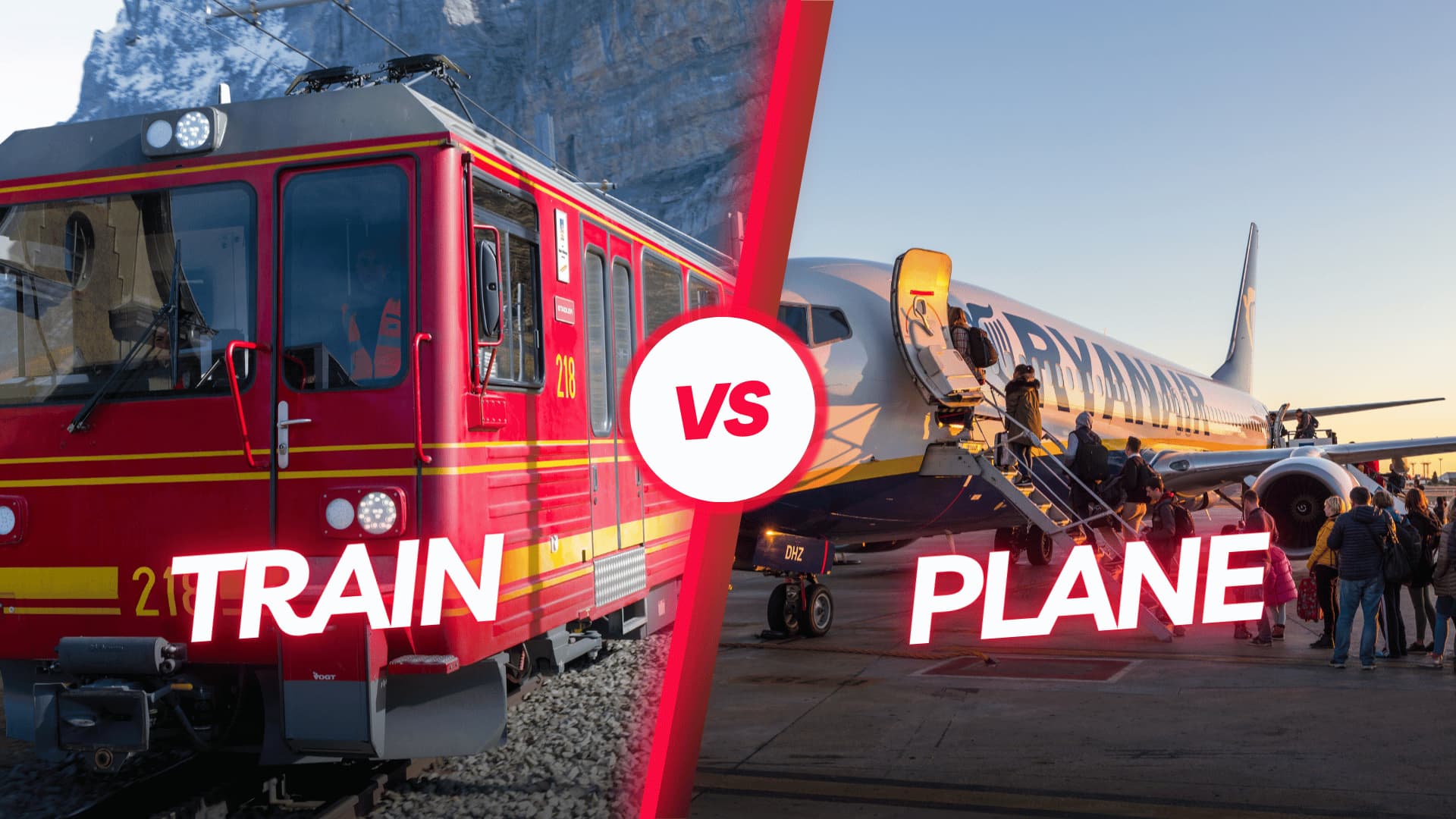
Train vs Plane: 5 Key Differences You Should Know
When I plan a trip across Europe, I always face the same question: train or plane? I’ve rushed through airports and I’ve relaxed on high-speed trains leaving city-centre stations. The choice isn’t just about price – it’s about time, flexibility, comfort, and environmental impact.
For shorter routes, trains often win door-to-door. For longer distances, flights still make sense. Here are five key differences to help you decide.
Imagine this….a battle of Train vs Plane. Two travellers leave Paris for Salzburg. One waits in the airport security line; the other sits with a coffee on a train pulling out of the station.
It’s a scene happening across Europe – you can easily switch the cities. But what doesn’t change is the growing debate: train or plane?
Choosing how to travel in Europe isn’t just about price anymore. Travellers now weigh sustainability, comfort, and the experience itself when deciding whether to fly or take the train.
In an era of climate awareness, many are rethinking their habits, with rail becoming a serious alternative to flying.
Europe’s rail revival, driven by Interrail and national operators, is bringing back the appeal of slow travel across Europe.
Panoramic views and city-centre stations make train journeys more than just a way to get from A to B.
But does taking the train always beat flying? Read on to find out.
Train vs Plane in Europe: Key Differences
The environmental impact is where trains clearly outpace planes. Rail travel emits significantly less CO₂ than flying – up to 90% less on certain routes.
Comfort is another major factor. Trains typically offer more legroom, no baggage charges, and scenic views. You’ll find fewer queues, shorter boarding times, and relaxed schedules.
In contrast, flying often involves rigid timing, extra costs, and airport stress.
Cost can vary. Budget airlines promote low fares, but fees for luggage and airport transfers add up quickly.
Interrail passes may appear costly upfront, but they offer unlimited travel flexibility, especially valuable on multi-country trips.

Travelling Europe by Train: Interrail and More
Europe’s extensive rail network covers virtually every major destination. Countries like France, Germany, Austria, and Switzerland boast high-speed services linking cities quickly and efficiently. In many cases, trains are faster door-to-door for trips under 500km.
Interrail passes offer huge flexibility for non-EU residents and Europeans alike. Whether you’re backpacking or planning a luxury tour, Interrail opens access to over 30 countries. Choose from 4-day to 3-month passes, with first or second-class options.
In Southern and Eastern Europe, train speeds and frequency vary. Italy and Spain run reliable high-speed services, though some routes require seat reservations.
In contrast, Eastern Europe offers charm and affordability, albeit at a slower pace. Interrailing here is ideal for those craving cultural depth over speed.
Top 5 Things to Consider When Choosing: Train vs Plane
1. Journey Time: Door-to-Door Matters

Flights may seem faster, but airport logistics change the equation.
For trips under 500km – such as Paris to Brussels or Berlin to Prague – trains are often quicker overall. High-speed services like the TGV, ICE, and Eurostar connect city centres directly, with minimal boarding time.
Flights involve:
- Early airport arrival
- Security queues
- Boarding delays
- Transfers from out-of-town airports
A 90-minute flight can easily become a 4–5 hour journey.
For long distances (London to Athens, Madrid to Warsaw), planes usually win. But for short to mid-range routes, trains frequently come out ahead.
Verdict: Under 500km, trains are often faster door-to-door.
2. Environmental Impact: Rail Wins Clearly

If sustainability matters to you, the difference is significant.
Rail travel in Europe produces up to 90% less CO₂ than flying the same route. Most European rail networks run on electricity, increasingly powered by renewables.
Short-haul flights are particularly carbon-intensive because takeoff and landing generate the highest emissions.
Choosing the train isn’t just symbolic – it’s one of the most impactful travel decisions you can make.
Verdict: Trains are dramatically more environmentally friendly.
3. Cost: Look Beyond the Ticket Price

Budget airlines advertise ultra-low fares. But once you add:
- Cabin or checked baggage fees
- Seat selection
- Airport transfers
- Food onboard
- Change fees
…the total often rises quickly.
Train fares are typically more transparent. With an Interrail pass, you pay upfront for flexible travel across multiple countries. While reservations are sometimes required on high-speed routes, surprise add-ons are rare.
For single long journeys, flying may be cheaper. For multi-city trips, train travel often delivers better overall value.
Verdict: Flights can look cheaper – but trains often cost less overall.
4. Flexibility: Trains Offer Freedom

Rail travel allows spontaneity.
If you fall in love with a city and want to stay longer, changing train plans is usually simple and inexpensive. With flexible tickets or an Interrail pass, you can adapt your journey easily.
Flights are far less forgiving. Budget airlines often charge high change fees, and the cheapest fares are rarely refundable.
Missed a train? Another one may leave within the hour.
Missed a flight? Your options shrink fast.
Verdict: Trains offer significantly more flexibility.
5. Comfort and Experience: The Journey Itself

Train travel in Europe is part of the experience.
You get:
- Spacious seating
- Freedom to move around
- Large panoramic windows
- Generous luggage allowances
- City-centre arrivals
Airports and planes are built for efficiency, not enjoyment. Security checks, tight seating, and limited movement make flying functional – but rarely relaxing.
If you value scenery, atmosphere, and a slower pace, rail delivers more than just transport.
Verdict: Trains win for comfort and overall travel experience.
Train vs Plane Europe: At a Glance
When weighing up whether to travel by train or plane across Europe, the right choice depends on more than just price.
From carbon footprints to comfort, flexibility to journey times, both transport types bring distinct pros and cons. Your priorities – whether they’re environmental, economic or experiential – will shape what suits you best.
While flights can seem quicker or cheaper on the surface, trains often win out in surprising ways, especially on short to mid-range routes.
The following sections break down five key factors that travellers should consider before booking.
Cost
- Train (Interrail): £167–£812 for passes, with occasional booking fees
- Plane: Variable fares, but often higher overall due to luggage and airport transfers
Carbon Impact
- Train: Low emissions, eco-conscious choice
- Plane: High emissions, especially for short-haul routes
Station Location
- Train: Arrive and depart from central city hubs
- Plane: Usually requires travel to/from out-of-town airports
Luggage Rules
- Train: Generous baggage allowances with no extra cost
- Plane: Strict size limits, often with extra fees for hold and even cabin bags
Flexibility
- Train: Easy to change plans with little to no cost
- Plane: High fees for ticket changes or cancellations
Journey Time (500km or less)
- Train: 3–4 hours including boarding
- Plane: 4+ hours once security and airport travel are included
Comfort
- Train: Spacious seating, scenic views, relaxed atmosphere
- Plane: Cramped conditions, queues, and limited movement
Train vs Plane FAQs
Is Interrail cheaper than flying?
Often yes, especially for multi-city trips when you factor in baggage and transfers.
Are trains faster than planes in Europe?
On routes under 500km, yes – due to city-centre stations and fewer security hassles.
Can I use Interrail in all European countries?
Interrail covers 33 countries. Some high-speed routes may require seat reservations.
Is train travel better for the environment?
Absolutely. Trains emit far less CO₂ than planes.
Do I need to book seats with Interrail?
Not always, but reservations are required on some high-speed trains for a small fee.
My Final Thoughts: Which Should You Choose?
There isn’t a one-size-fits-all answer.
If speed across long distances is your priority, flying makes sense. But if you value flexibility, comfort, sustainability, and seeing more of Europe along the way, trains are hard to beat.
Often, the smartest approach combines both: fly to your starting point, then explore by rail.
Because in Europe, the journey itself can be just as rewarding as the destination.