

Why Europe by Train Is My Favourite Way to Travel
I’ve travelled across Europe by train – from London to Rome and Berlin to Croatia – and discovered that the journey can be just as meaningful as the destination. Here’s how to plan your own rail adventure, including the most scenic routes and practical booking tips.
Travelling Europe by train is one of the easiest and most rewarding ways to explore the continent.
With high-speed connections between major cities, scenic alpine routes, and centrally located stations, train travel in Europe combines efficiency with slow travel.
Whether you’re planning a multi-country Interrail trip or booking individual tickets, this guide covers the best routes, cities, scenic journeys and practical booking advice.

From the stunning architecture of Paris, the Alpine cities across Switzerland and Austria, and Italy’s coastal gem of the Cinque Terre, some of my favourite train trips across Europe are featured below.
With comfortable seating, stunning scenery, and easy access to some of Europe’s most iconic landmarks, I think it’s a great way to explore Europe at your own pace.
Europe by Train

Travelling through Europe by train is the perfect way to embrace slow travel. With panoramic views and (hopefully!) seamless connections, the journey becomes as rewarding as the destinations.
On my trip from London to Rome by train, via Switzerland and Austria, I sped through the Channel Tunnel, alpine peaks and the best of Italy. Each place offered a glimpse of local life, turning travel time into part of the adventure.
Train travel also makes crossing borders easy and stress-free.
On my journey from Berlin to Croatia via Switzerland and Italy in 2024, I experienced doing a range of different activities from hiking in the Swiss Alps to eating pizza in a Milan square – all without the hassle of airports.

Stations in city centres mean you step straight into the heart of where you’re visiting.
Above all, trains encourage a slower, more meaningful connection with Europe.
Best Train Cities
Europe is home to some of the most iconic cities in the world, and unlike many other parts of the world, many of them are well-connected by train and it’s an easy way to get around.
Whether you’re interested in history, culture, or simply want to explore new places, travelling by train is a great way to see some of the best cities in Europe.
I think these are three of the most iconic European cities and their rail connections.
Paris: The Heart of French Culture and High-Speed Trains

Paris, the capital of France, is known for its art, fashion, cuisine, and of course, the Eiffel Tower.
It’s also home to one of the most extensive high-speed train networks in Europe, making it easy to explore other parts of France and beyond.
The Gare du Nord is one of the busiest train stations in Europe and serves as a hub for international trains to London, Brussels, and Amsterdam.
From here, you can also take a high-speed train to Lyon, Marseille, or Bordeaux, all of which are known for their wine, food, and culture.
Rome: Italy’s Eternal City and Its Historic Stations

Rome, the capital of Italy, is known for its ancient ruins, such as the Colosseum and the Roman Forum, as well as its art, architecture, and cuisine.
It’s also home to Roma Termini, which is the main railway station in Rome.
From Roma Termini, you can take a high-speed train to Florence, Venice, or Naples, all of which are known for their art, history, and culture.
Berlin: Germany’s Cultural Hub with Extensive Rail Networks

Berlin, the capital of Germany, is known for its art, music, and history.
It’s also home to one of the most extensive rail networks in Europe, making it easy to explore other parts of Germany and beyond.
The Berlin Hauptbahnhof is one of the the largest train stations in Europe and serves as a hub for high-speed trains to Hamburg, Frankfurt, and Munich.
From here, you can also take a train to Dresden, which is known for its baroque architecture and art, or to Potsdam, which is home to several historic palaces and gardens.
Scenic Rail Journeys Across Europe
Travelling by train is one of the best ways to explore Europe, and scenic rail journeys are a great way to see some of the most beautiful landscapes on the continent.
Here are some of the best scenic train journeys in Europe that you can explore.
The Glacier Express in Switzerland

The Glacier Express is one of the most scenic train journeys in Switzerland. This train takes you from Zermatt to St. Moritz, through the Swiss Alps.
The journey takes around 8 hours and passes through 91 tunnels and over 291 bridges.
The train also passes through the Rhine Gorge, which is known as the Grand Canyon of Switzerland. Along the way, you can enjoy stunning views of the Swiss Alps and the beautiful scenery of the region.
The Golden Pass and Bernina Express
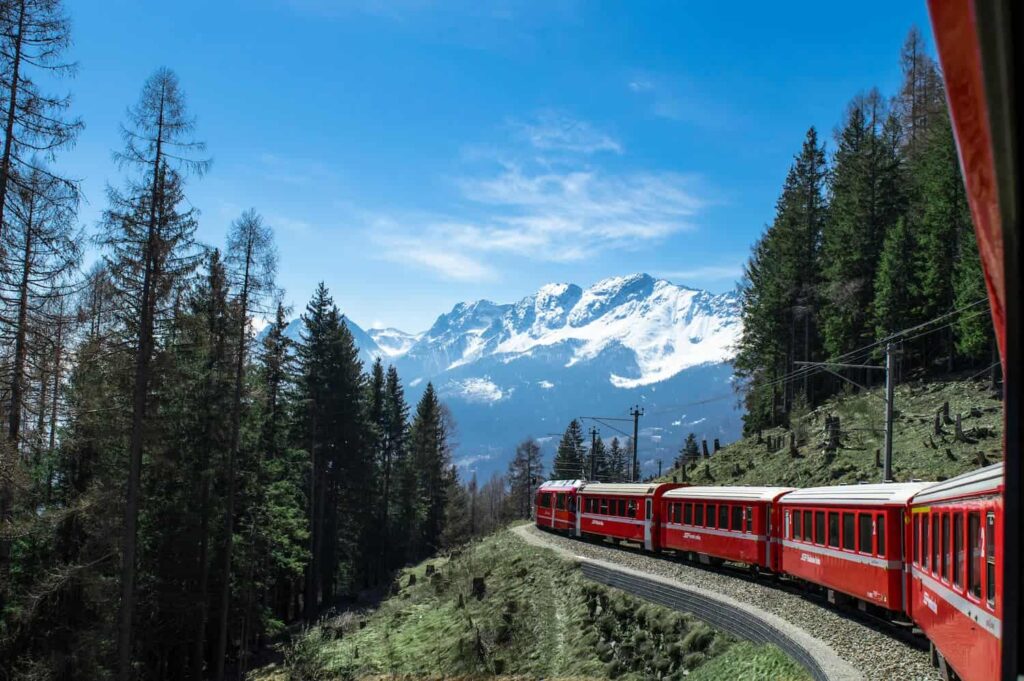
Two of the most scenic train journeys in Switzerland. The Golden Pass takes you from Lucerne to Montreux, passing through Interlaken and the Bernese Oberland.
The journey takes around 5 hours and passes through beautiful landscapes and picturesque towns.
The Bernina Express takes you from Chur to Tirano, passing through the Swiss Alps and the Italian countryside. The journey takes around 4 hours and passes through 55 tunnels and over 196 bridges.
Exploring the Scottish Highlands by Train

The Scottish Highlands are one of the most beautiful regions in Scotland, and exploring them by train is a great way to see the stunning scenery.
The West Highland Line takes you from Glasgow to Mallaig, passing through the Scottish Highlands and some of the most beautiful landscapes in Scotland.
Along the way, you can see old towns, castles, and beautiful scenery. The journey takes around 5 hours and is a great way to experience the beauty of Scotland.
Cultural Experiences in European Capitals
Europe’s Best Cities by Train offer everything from art and architecture to cuisine and history, there is something for everyone to discover.
Here are some of the best cultural experiences you can have in some of Europe’s most well-connected capitals.
Art and Architecture in Florence and Venice

Florence and Venice are two of the most beautiful cities in Italy, and they are both renowned for their art and architecture.
In Florence, you can visit the famous Duomo, a magnificent cathedral with a stunning dome designed by Brunelleschi.
You can also explore the Uffizi Gallery, which houses some of the most important works of the Italian Renaissance, including Botticelli’s “The Birth of Venus.”
In Venice, you can take a gondola ride through the city’s famous canals and marvel at the stunning architecture of the floating city.
You can also visit the Peggy Guggenheim Collection, which has a fantastic collection of modern art, including works by Picasso, Dali, and Pollock.
Cuisine and Museums in Madrid and Barcelona

Madrid and Barcelona are two of the most vibrant cities in Spain, and they are both renowned for their cuisine and museums.
In Madrid, you can visit the Prado Museum, which has an incredible collection of Spanish art, including works by Goya, Velazquez, and El Greco. You can also enjoy some of the city’s famous cuisine, including tapas, paella, and churros.
In Barcelona, you can visit the famous Sagrada Familia, a stunning cathedral designed by Gaudi. You can also explore the Picasso Museum, which has an incredible collection of works by the famous artist.
And of course, you can enjoy some of the city’s famous cuisine, including fresh seafood, Catalan-style tapas, and delicious pastries.
Historical Landmarks in Salzburg and Budapest

Salzburg and Budapest are two of the most beautiful cities in Austria and Hungary, and they are both renowned for their historical landmarks.
In Salzburg, you can visit the famous Hohensalzburg Fortress, a stunning castle that overlooks the city with great views. Or why not head to Mirabell Gardens, where part of the famous film The Sound of Music was filmed.
In Budapest, you can visit the famous Fisherman’s Bastion, a stunning castle with beautiful views of the city.
You can also explore the city’s famous cathedral, St. Stephen’s Basilica, which has a beautiful neo-classical design.
And of course, you can visit some of the city’s famous thermal baths and enjoy some of Hungary’s famous cuisine, including goulash, chimney cake, and strudel.
Practical Tips for Train Travel in Europe
Travelling through Europe by train is an efficient and convenient way to explore the continent. With a bit of planning and preparation, you can make the most of your rail journey.
To make things easier for you, I’ve brought together some of my top practical tips to help you along the way.
Understanding Timetables and Train Types
Before setting off on your train journey, it’s important to familiarise yourself with the timetables and train types. You can find up-to-date timetables and route maps on Rail Europe. I found this to be the easiest to use when booking my trips.
There are several types of trains in Europe, including high-speed trains, regional trains, and overnight sleeper trains. High-speed trains are faster and more expensive, while regional trains are slower and cheaper.
Sleeper trains are booming in popularity, and I’ve found them to be a great way to save time and money. They offer a range of sleeping options, from reclining seats to private cabins.

Things to Do While Travelling Between Destinations
Exploring Europe’s best cities by train offers a unique opportunity to take in the scenic views and cultural experiences along the way. Here are some things you can do to make the most of your journey:
- Pack a picnic and enjoy a meal on the train
- Read a book or listen to music
- Strike up a conversation with fellow travellers
- Take in the views from the train window
- Plan your itinerary for your next destination
By following these practical tips, you can make your train journey through Europe a memorable and enjoyable experience.
Which Seat?
Most train companies offer different classes of service, ranging from standard to first class, with varying amenities and levels of comfort. First-class tickets often include more spacious seating, sometimes complimentary meals, and on occasion access to lounges.
Day Trips and Multi-Country Adventures
Train travel in Europe allows you to easily plan day trips to neighbouring cities. For example, from Paris, you can take a train to Brussels, Amsterdam, or London easily.
To make the most out of your day trips or multi-country excursions, plan ahead and book your tickets in advance. This will help you save time and money, and ensure that you get to your desired destination on time.

How to Book Train Tickets in Europe
Booking tickets for Europe by train is easier than ever, but the right approach depends on how you’re travelling.
If you’re planning a fixed itinerary with specific dates, booking point-to-point tickets in advance can often secure the best prices – particularly for high-speed routes in France, Italy, Spain and Germany.
For example, trains departing from Paris, Rome or Berlin tend to be cheaper when reserved early, especially during summer.
For flexible, multi-country trips, an Interrail pass can offer better value and freedom.
I’ve used Interrail on two longer journeys, and what I loved most was the ability to adjust plans without feeling locked into one rigid schedule. You simply reserve seats where required and travel on eligible routes within your pass period.
For researching routes, comparing journey times and checking connections, I usually start with Rail Europe, as it gives a clear overview across multiple countries.
However, once I know my exact route, I sometimes book directly with national rail operators for slightly lower prices.
A few practical things I’ve learned:
- High-speed trains often require seat reservations, even with a rail pass.
- Regional trains are usually more flexible and may not require advance booking.
- Sleeper trains should be booked as early as possible, as cabins sell out quickly.
- Popular summer routes (especially through Switzerland and Italy) can fill up weeks ahead.
If you prefer structure, book your long-distance journeys early and leave shorter regional connections flexible. That balance works well for slow travel – enough planning to feel secure, but enough freedom to adapt along the way.

How Much Does Europe by Train Cost?
The cost of travelling Europe by train depends on distance, speed and flexibility.
High-speed routes between major cities like Paris and Rome can range from €30-€120 depending on how early you book. Regional trains are typically cheaper and more flexible.
An Interrail Global Pass can cost anywhere from around €200 to €500 depending on duration and age category. For multi-country trips, this can represent excellent value.
In general:
- Booking early = cheaper high-speed tickets
- Regional routes = lower cost but slower
- Sleeper trains = higher upfront cost but save on accommodation
For longer slow travel journeys across multiple countries, a rail pass often offers the best balance of flexibility and value.
Europe By Train FAQs
Where’s best by train from London?
London is a popular starting point for exploring Europe by train. Paris, Brussels, and Amsterdam are all easily accessible, with journey times ranging from just over two hours to around four hours.
What’s the most scenic train trip in Europe?
A few notable examples include the Bernina Express from Chur, Switzerland, to Tirano, Italy, which offers stunning views of the Swiss Alps, and the West Highland Line from Glasgow to Mallaig in Scotland, which takes you through some of Scotland’s most beautiful and rugged landscapes.
Are trains the same in every European country?
The train systems in Europe vary by country, but in general, they are efficient, reliable, and relatively affordable. Many countries have high-speed train networks that make it easy to travel quickly between cities, while others have more traditional train systems that offer a slower, more scenic journey.
What are the most beautiful capitals by train in Europe?
There are many beautiful views on what are Europe’s best cities by train, but one standout is Vienna, Austria. The journey to Vienna by train is scenic and relaxing, and the city itself is a stunning mix of Baroque and Art Nouveau architecture, beautiful parks, and world-class museums.
How best to explore Europe by train?
The optimal route for exploring Europe by train depends on your interests and the amount of time you have available. However, a popular route is the “Grand Tour” of Europe. This takes you through some of the continent’s most iconic cities and landmarks, including Paris, Amsterdam, Berlin, Prague, Vienna, Venice, Florence, Rome, and Barcelona.
My Final Thoughts
What I love most about travelling by train is the sense of connection – to places, people, and the continent itself.
You see Europe unfold through the windows, from cities to peaceful countryside, and you experience the character of each region at a more natural pace.
Compared to flying or driving, Europe by train offers a unique balance of sustainability, comfort and connection.
With fewer emissions than short-haul flights and far less stress than navigating unfamiliar roads, rail travel is increasingly seen as the most sustainable way to explore Europe.
Interrailing, in particular, offers the freedom to explore on your own terms. For me, there’s no better way to discover Europe than by train.


